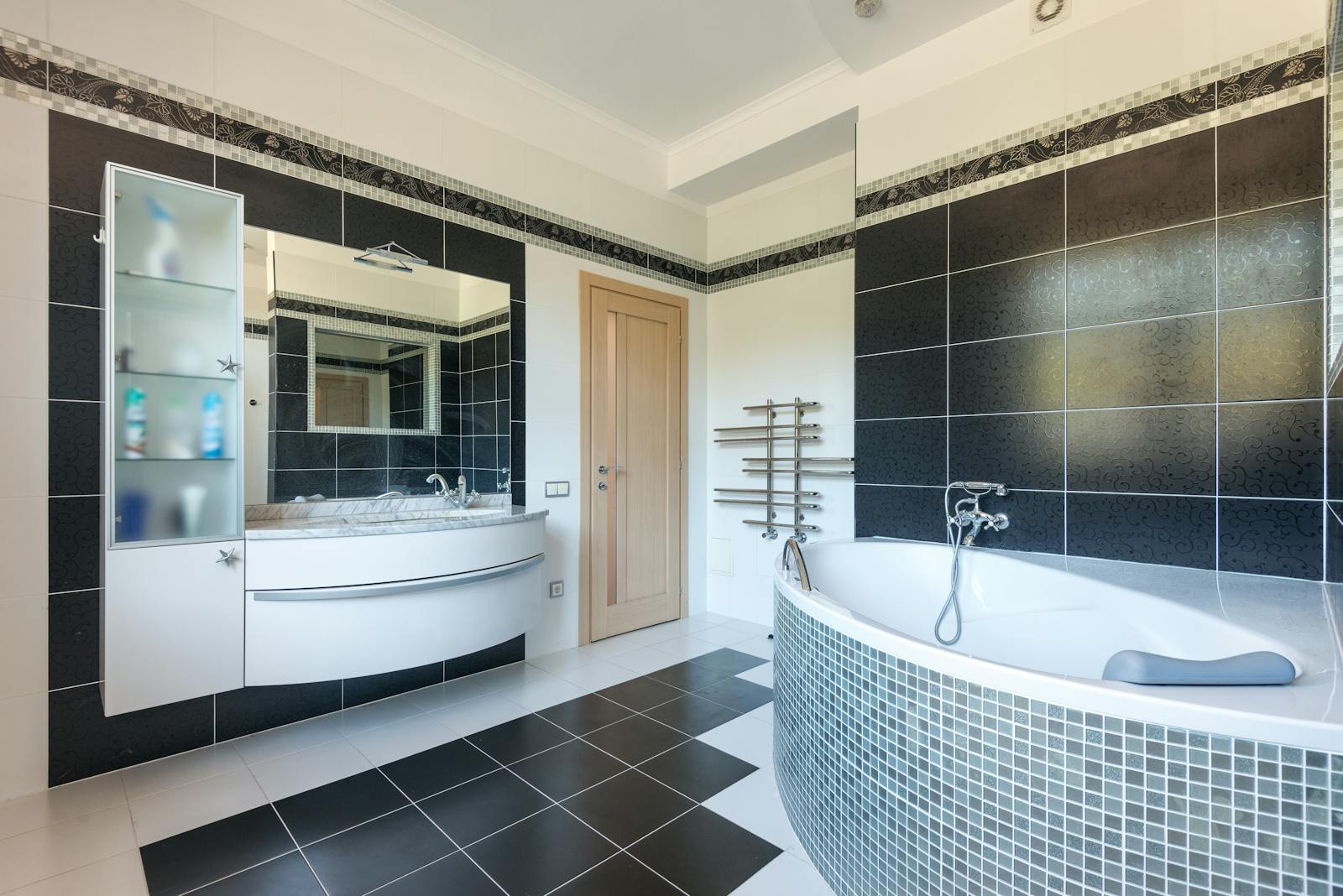
Walk into any tile showroom today and you will see the same thing: rows of sample tiles mounted on boards, fluorescent lighting that bears no resemblance to a real home, and customers squinting at a 30×30 centimetre swatch trying to imagine how it will look across 40 square metres of living room floor. It is an act of imagination that most buyers simply cannot perform with confidence. And that uncertainty costs showrooms sales every single day.
The AI room visualizer changes that equation completely.
What an AI room visualizer actually does
An AI room visualizer allows a customer to upload a photo of their actual room — their living room, bathroom, kitchen — and then see any tile from your catalog applied to that space in real time. The AI engine identifies the floor or wall area in the photo, maps the tile texture and colour onto it, and renders a photorealistic preview within seconds.
There are no specialist cameras required, no lengthy consultations, no CAD software. The customer takes a photo on their phone, opens your showroom’s visualizer link or kiosk, selects a tile, and sees the result immediately.
The technology has matured enormously since its early versions. Modern visualizers handle perspective distortion, grout line simulation, mixed-material rooms, and even varying light conditions. The output looks like a genuine renovation photo, not a cartoonish overlay.
The conversion numbers are hard to ignore
The data consistently shows the same pattern across showrooms that adopt room visualisation tools.
Customers who use a visualizer are 3× more likely to complete a purchase on that visit. This is not surprising when you think about what the visualizer removes: doubt. The single biggest reason a customer walks out of a showroom without buying is that they are not confident the tile will look right. The visualizer answers that question directly.
Average basket values increase by 25–40%. When a customer can see their room, they start experimenting. They look at the large format version of a tile. They check a premium marble-effect option alongside the standard one. They ask about the matching wall tile because they can now see the full picture. The visualizer opens a conversation that the sample board never could.
Returns and post-purchase regret drop significantly. One of the hidden costs of a tile business is handling returns from customers who got home and decided the tile looked different from what they expected. When the customer has already seen their room with the tile, that surprise disappears.
Why 2026 is the year this becomes non-negotiable
Three forces have converged to make AI room visualization an expectation rather than a nice-to-have.
Consumer expectations have shifted. Customers have spent the past few years using AR try-on tools for glasses, furniture preview tools from major retailers, and paint colour simulators from hardware chains. They now expect this capability from any serious home improvement retailer.
Smartphone cameras are good enough. The photo quality required for accurate visualization used to need a professional camera or at minimum a very good DSLR. Today’s smartphone cameras are more than sufficient. Every customer walking into your showroom has a capable visualization device in their pocket.
The technology is now genuinely accessible. Two years ago, implementing a room visualizer meant commissioning a custom software project at significant cost. Today, platforms like Vizaye offer this as a built-in feature that can be live in your showroom in under 10 minutes — connected directly to your product catalog.
Setting up a visualizer in your showroom: the practical steps
Step 1: Choose a platform with catalog integration
The visualizer is only as good as the catalog behind it. If adding a new tile to the visualizer requires a separate manual step, it will not stay current and staff will stop using it. Choose a platform where your catalog and the visualizer are the same system — products added to the catalog are immediately available in the visualizer.
Step 2: Deploy it at the right touchpoints
There are three places where a room visualizer delivers maximum impact:
- In-store kiosk: A tablet or screen mounted near key displays gives customers a hands-on experience while their interest is at its peak.
- Showroom QR codes: A QR code next to each tile display opens the visualizer pre-loaded with that specific tile. Customers can use it on their own phone while browsing.
- Your website: Customers increasingly do significant research before visiting a showroom. A visualizer on your website captures this earlier-stage engagement and drives qualified footfall.
Step 3: Brief your staff properly
The visualizer is a sales tool, not a self-service kiosk to be ignored. Train your team to use it proactively — “Let me show you what that would look like in your bathroom” is one of the most powerful sentences a sales consultant can say. It moves the conversation from abstract to concrete in seconds.
Step 4: Track the data
Any modern visualization platform will give you data on which tiles customers are visualizing most, which rooms they are using the tool for, and where they are dropping off. This data is genuinely useful for merchandising decisions, staff training, and understanding what is driving your sales.
Addressing the common objections
“Our customers are not tech-savvy enough.” The visualizers in use today are designed for zero technical knowledge. If a customer can take a photo and tap a tile, they can use it. In practice, the demographic that struggles most is not elderly customers — it is often middle-aged buyers who assume technology is not for them until they try it.
“We tried something like this before and the results looked fake.” The previous generation of visualizers did produce unconvincing results. The current generation, using diffusion model rendering and proper perspective mapping, produces results that consistently impress customers. If you have not seen recent output, it is worth looking again.
“It will take too long to set up.” With a platform that handles catalog hosting and visualization together, the setup time is measured in minutes for the visualizer itself. The main time investment is photographing your tile range — which you likely need for your website anyway.
The competitive reality
In the next 12 months, the majority of well-run tile showrooms in competitive markets will have room visualization. The question is whether you are one of the early adopters who uses it as a genuine differentiator, or whether you adopt it once it has become table stakes.
The showrooms that move first will train their customers to expect the experience, build a reputation for helping people make confident decisions, and develop staff who are expert at using the tool to close sales. That advantage compounds over time.
The investment is small. The upside — a 3× lift in purchase intent, higher basket values, fewer returns — is significant. If you have been considering adding visualization to your showroom, 2026 is the year to stop considering and start doing.
Related blog posts
- What is a Tile Visualizer? Complete Guide
- Selling large format tiles: why visualization is non-negotiable
- QR codes in your showroom: the one change that transformed our conversion rate
Related resources and next steps
- Deep dive: Why AI Visualization is the Future of Stone Selling.
- For showroom teams, explore the Retailers page.
- Explore all capabilities in the Vizaye Features Hub.
- See category workflows in the Surface Material Solutions Hub.
- Try the AI Room Visualizer feature.
- Compare methods in Room Visualizer vs Traditional Sampling.
Ready to transform your surface material business?
Join businesses using Vizaye to visualize, sell, and grow faster.
🚀Try for Free